Scope
The International Conference on Sustainable and Intelligent Education: Towards a Future, addresses virtually nowadays most important issues of education, which are sustainability and artificial intelligence (AI). Both issues are urgent considering nowadays geopolitics that exposed needs for a new generation of sustainability thinking, affecting and demanding new education models as well, and the overall AI revolution that has potential, and in some cases already affects significantly, to radically change our education models, up to elimination of actual models in virtually all dimensions.
SIED2026
1st International Conference on
Sustainable and Intelligent Education: Towards a Future

21st - 23rd October 2026
Póvoa de Varzim Portugal
Round Table
Round Table 1:
What is the role of philosophy of education in the ear of AI: growing or death?
Moderated by:
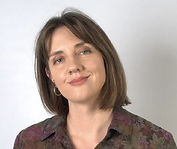
Dr. Ezechiel Thibaud
The Education University of Hong Kong
Department of Education Policy and Leadership
Abstract
It may be tempting to believe that as Large Language Models (LLMs) can produce texts, images and what may look like thoughts, they threaten to render the humanities, and social sciences obsolete as academic disciplines. It can be argued, however, that the opposite phenomenon is occurring: LLMs and generative AI provide a wonderful opportunity to re-discover and appreciate the crucial importance of these fields to foster critical thinking, reflective understanding of society, and authentic self-expression. Disciplines like philosophy of education, therefore, are more essential than ever, as they shed light on the very practice of education, its nature, its purpose, and the strategies that should be employed. Furthermore, generative AI forces us to ask the kind of questions that have long been overlooked: Why do we seek education in the first place? What is the purpose of an assignment? Is education doomed to remain within a human capital framework that sees students as investment for the workforce of tomorrow, or can it be conceived as something else (e.g. a holistic process that creates love of learning for learning’s sake)? Philosophy of education helps us answer these complex but pressing questions, that the emergence of generative AI tools and their rapid integration into the field forces us to look directly into.
Biography
Ezechiel Thibaud is a lecturer at the Education University of Hong Kong, where she teaches philosophy, education theory and pedagogy for the department of Education Policy and Leadership. Originally from France where she received her bachelor’s and master’s degrees in philosophy, she received her PhD from Lingnan University in Hong Kong in 2021. Her PhD dissertation focused on political philosophy and more specifically the concept of autonomy and self-government from various political perspectives.
She has also worked as a teacher in various contexts and regions of the world, and her current work includes teacher formation and training, through her university teaching formation programmes and various workshops. Her current research interests include philosophy of technology, AI ethics, comparative education and philosophy of educational practices.